Lectures & Other Activities
Should we still read poetry in the Age of AI? --Professor Chia-ying YEH's Aesthetics of Poetic Life (25/7/2026)
Published on 2026-07-07
Professor Chia-ying Yeh is an internationally renowned scholar and educator of Chinese poetry and a Fellow of the Royal Society of Canada. Having dedicated her life to research and teaching in the field, she taught at numerous universities around the world before founding the Institute of Chinese Classical Culture (ICCC) at Nankai University in 1993. Her influence can be attested to in the scores of students she mentored and the millions of readers and listeners of her books and lecture series. At the same time, Professor Yeh is also an accomplished poet.
The composition of Classical poetry is an important element of Sinitic culture. Professor Yeh was an avid promoter of poetic composition; in particular, she has placed high hopes in the propagation of the humanistic spirit amongst young people. On the 102th birthday of Professor Yeh, the Mr. Simon Suen and Mrs. Mary Suen Sino-Humanitas Institute (SHI) of Hong Kong Baptist University is glad to invite Professor Jing ZHANG from Department of Chinese Language and Literature and the Institute of Chinese Classical Culture of Nankai University, to share her thoughts on Professor Chia-ying YEH's aesthetics of poetic life for SHI's Frontiers in Sino-Humanitas Lecture series. For more details about the event, please refer below.
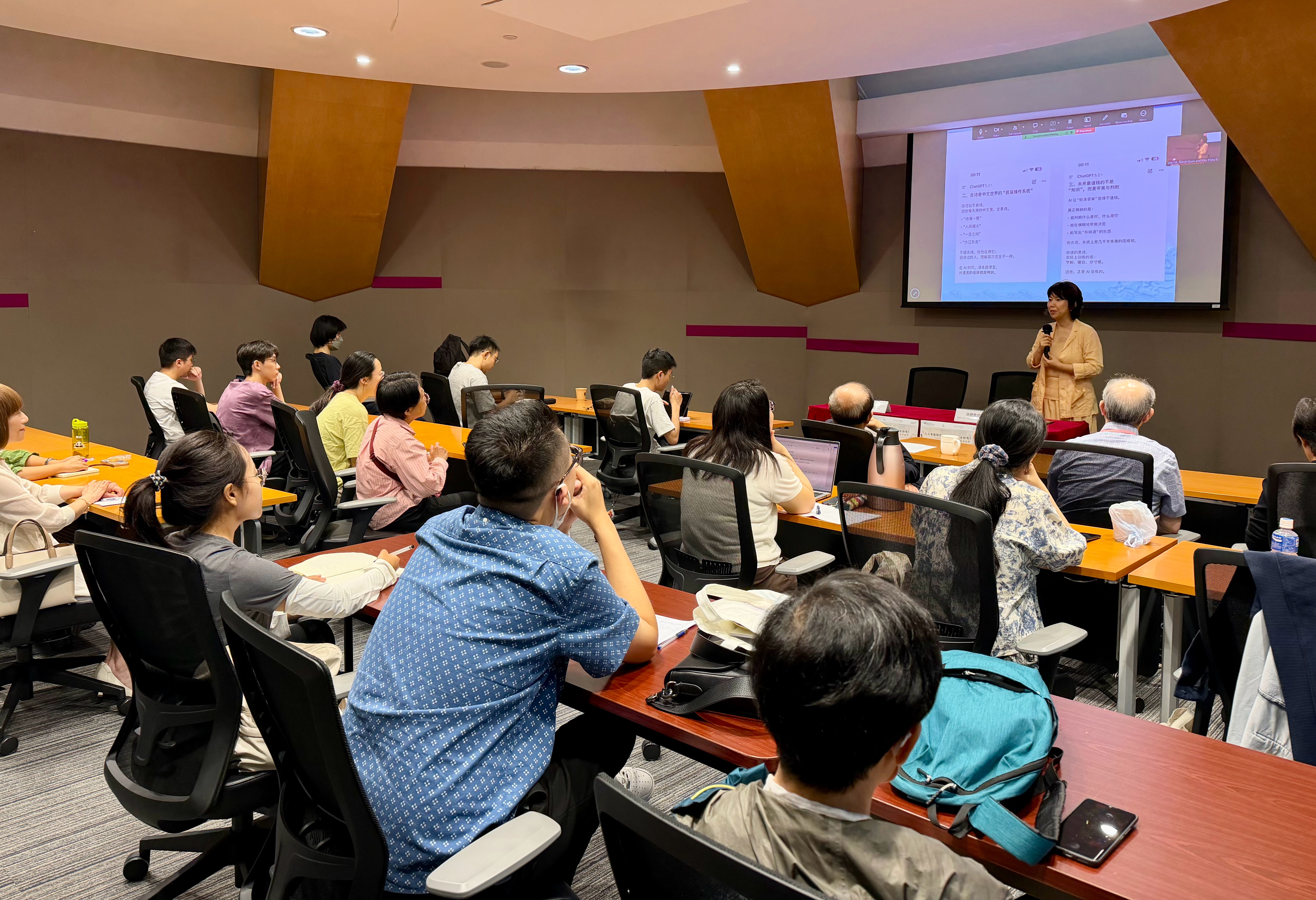
Frontiers in Sino-Humanitas Lecture: Should we still read poetry in the Age of AI? --Professor Chia-ying YEH's Aesthetics of Poetic Life
Organiser: Mr. Simon Suen and Mrs. Mary Suen Sino-Humanitas Institute, HKBU
Date: 25 July 2026, Saturday
Time: 10:30 am – 12:00 pm
Venue: SWT702, 7/F, Shaw Tower, Shaw Campus, Hong Kong Baptist University
Language: Mandarin
About the Speaker: https://wxy.nankai.edu.cn/2019/1101/c18324a244221/page.htm
Lecture video: https://hkbutube.lib.hkbu.edu.hk/inner.php?id=BTS-101303
Summary (in Chinese only):
本次講座,南開大學張靜教授以「人工智能時代,我們還要讀古詩嗎?」為題,以葉嘉瑩先生的詩歌生命美學為線索,圍繞「為何讀詩」、「詩是什麼」、「如何讀懂詩」以及「葉先生的詩教人生」四個核心問題層層展開,為我們呈現了古典詩詞在當代乃至未來不可取代的精神價值。
張教授首先指出人工智能雖能輔助學習,卻缺乏生活的感知與情感共鳴。她引用ChatGPT關於「在人工智能時代是否需要讀古詩」此一問題的答案,強調讀詩實際上是訓練「節制、留白、分寸感」。她接著援引《荀子.勸學》與《弟子規》,指出學文須力行;又以文天祥《正氣歌》「風簷展書讀,古道照顏色。」以及陳寶琛「文明新舊能相益,心理東西本自同。」指出通過讀詩,新舊文化不但交融互通,古人的精神還可照耀今人。而王夫之《俟解》「聖人以詩教以蕩滌其濁心,震其暮氣」,則進一步揭示了詩歌淨化與激勵心靈的獨特功用。故此,張教授認爲以詩詞為代表的中國古典文化,能夠引領人工智能發展的方向。
在探討「詩是什麼」時,張教授以金聖歎「詩非異物,只是人人心頭舌尖所萬不獲已」,又以杜甫《縛雞行》「雞蟲得失無了時,注目寒江倚山閣。」為例,闡釋詩歌能將人們從煩惱中抽離出來,從而把精力投向更積極的目標上。聞一多認爲詩人的貢獻是「使人精神有所寄託」, 顧隨則認爲中國詩教「不是教作詩,是使做好人。」張教授以他們的論斷,道出中國詩教旨在涵養性情、成就品格。
關於「如何讀懂古詩」,張教授以王國維「三種境界」,顧隨「發心、行腳、頓悟」,以及錢鍾書「破我、忘我、無我」三種治學之境,説明讀詩是不斷超越自我的精神之旅。張教授在講座第四部分回顧了葉嘉瑩先生的傳奇人生,並以憨山德清大師「荊棘叢中駐足易,月明簾下轉身難。」來向歷經磨難仍堅持詩教的恩師致敬。張教授最後以鄭愁予《野店》「是誰傳下這詩人的行業?黃昏裏掛起一盞燈。」作結,勉勵大家在人工智能時代更須讀詩,以詩來點亮自己、照亮他人。
(Recorded by Fung Pui Yi, research postgraduate of the institute)