Lectures & Other Activities
Divination and Literature (11/6/2026)
Published on 2026-05-20
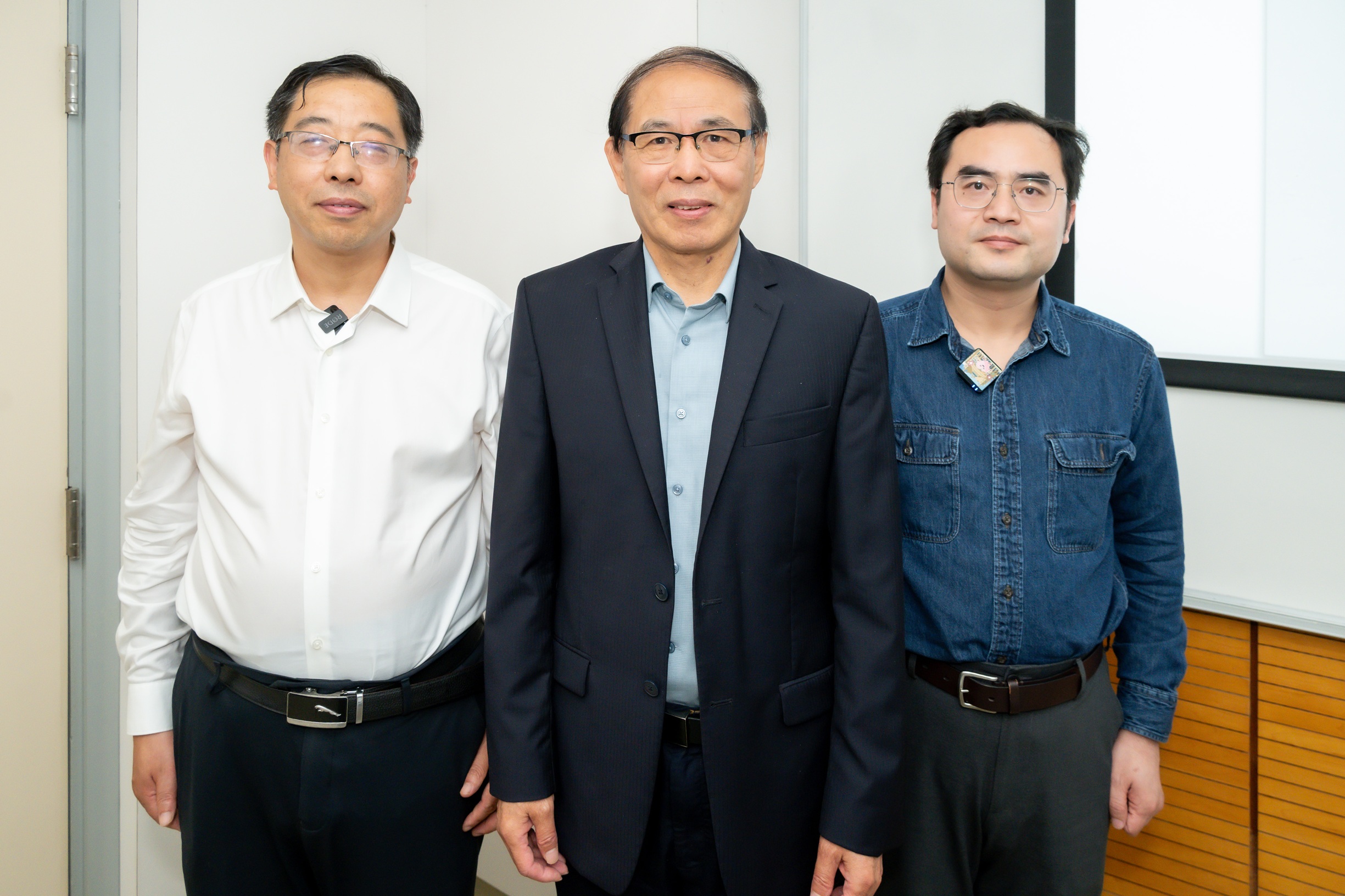
The Frontiers in Sino-Humanitas Lecture series organized by the Mr. Simon Suen and Mrs. Mary Suen Sino-Humanitas Institute, is glad to invite two important scholars—Professor Shaoxuan Cheng and Professor Lizeng Wang. In mid-June, they will both visit Hong Kong Baptist University to jointly deliver a public lecture entitled "Divination and Literature," where each will share their insights on different topics. For more details about the event, please refer below.
Frontiers in Sino-Humanitas Lecture: Divination and Literature
Organiser: Mr. Simon Suen and Mrs. Mary Suen Sino-Humanitas Institute, HKBU
Date: 11 June 2026, Thursday
Time: 3:30 – 5:30 pm
Due to overwhelming responses, the venue is changed to: Room WLB201, 2/F, The Wing Lung Bank Building for Business Studies, Shaw Campus, Hong Kong Baptist University
Language: Mandarin
Titles and Speakers:
The Diverse World of Divination and Numerology Texts
Prof. Shaoxuan Cheng (School of Liberal Arts, Nanjing University)
Ban Gu’s Reconstruction of the Han yuefu Institution as Idealized Creation
Prof. Lizeng Wang (School of Chinese Language and Literature, Jiangsu Normal University)
Summary (in Chinese only):
The Diverse World of Divination and Numerology Texts
本次講座,南京大學文學院程少軒教授以「不拘一格的數術文獻」為題,
先概述研究緣起,接著介紹「圖文俱全的數術文獻」和「有文無圖的數術文獻」的特徵,然後講述圖文復原與數術解析的案例,為我們帶來了古典學重建項目——數術研究的有趣的方法。
程教授首先指出數術文獻具有三大特點,包括預設讀者擁有陰陽五行等背景知識、文本穩定性差、文字與圖表轉換頻繁。講座展示多種圖文俱全的文獻,如太陰刑德大游圖、刑德小遊圖、艮山圖、政事之常、隸首;接著分析有文無圖數術文獻的研究難點,如《史記·曆術甲子篇》、馬王堆帛書《五星占》等,這些純文字的數術文獻乃圖表之文字敘述。通過復原周家寨漢簡《五龍圖》、清華簡《四時》、《五紀》、《五音圖》等案例,程教授強調將一維文本復原為二維圖像(升維),是解析數術的關鍵方法,能還原古人的空間思維與文本原貌。
最後,程教授總結並指出,數術文獻的研究不能拘泥於文字表述,適當利用圖文轉換的方法,透過把文本復原為圖像的“升維”手法,能全面解析文本。圖文轉換是數術研究中獨特且有效的研究方法。
(Recorded by Fung Pui Yi, research postgraduate of the Institute)
Ban Gu’s Reconstruction of the Han yuefu Institution as Idealized Creation
江蘇師范大學文學院教授、院長王立增教授於2026年6月11日下午蒞臨我校,為本校師生及公眾人士展開了題為「班固對漢『樂府』的書寫策略與粉飾性建構」的講座。本次講座指出,今人對樂府的原初認知多源自《漢書》,然班固的記述其實暗含主觀建構。他透過史料排布與春秋筆法,掩蓋樂府「非為雅樂」的俗樂本質,將其粉飾為「采風觀政」的理想官署。
《漢書》中樂府史料散見於紀、表、志、傳,多錄自詔令奏議,可信度較高;但《禮樂志》《藝文志》稱漢武帝「立樂府」,卻與《百官公卿表》及秦封泥所證「秦已有樂府」相矛盾。王教授認為,班固或因未見武帝立樂府的檔案,故未載於《武帝紀》,而將此事置於志中以構建「立—罷」的線性史觀,既凸顯武帝功績,亦為東漢禮樂建設鋪墊。
班固刻意迴避樂府表演俗樂的史實,轉而在《禮樂志》中詳述雅樂傳統,將樂府嫁接於「古樂」系統。他透過「采詩夜誦」「觀風俗知薄厚」等表述,賦予樂府儒家教化功能,並以「感於哀樂,緣事而發」概括其文學特質,實則是對樂府功能的理想化重構。
講座最後,王教授強調班固的書寫塑造了後世對樂府「觀政」功能的認知,影響中唐新樂府運動及歷代史書對俗樂的粉飾書寫,啟示研究者須警惕文獻的主觀性,結合出土材料還原歷史本相。
(Recorded by Chen Keyu, research postgraduate of the Institute)
About the speakers:
CHENG Shaoxuan received a BA from the Department of Intensive Instruction for Arts at Nanjing Universtity in 2006, and earned a Ph.D from the Center for Research on Chinese Excavated Classics and Paleography at Fudan Universty in 2012. His research interests focus on Chinese paleography and excavated manuscripts, particularly in hemerological bamboo and silk books of the Warring States, Qin, and Han. His Ph.D thesis was published as a monograph titled On a Lost Ancient Book about Shizhan in Fangmatan Bamboo-slips in 2018. He participated in the research project of the reorganization of the Mawangdui manuscripts. Years of work on the Mawangdui hemerological manuscripts of Xingde and Yinyang Wuxing produced a series of articles such as “On the Calendars in the Mawangdui Xingde and Yinyang Wuxing: Centered on the Yinyang Wuxing B” (The Bulletin of the Institute of History and Philology Academia Sinica, 2016, Vol.87.2). Currently working on cosmic diagrams seen in excavated manuscripts and archaeological relics.
Prof. WANG Lizeng, 王立增,甘肅甘谷人,文學博士,現為江蘇師范大學文學院教授、院長,兼任中國樂府學會常務理事、江蘇省方志學會常務理事等。主要從事中國古代樂府詩、唐宋詩詞、文學地理學方面的研究,主持完成國家社科基金項目3項,出版專著《唐代樂府詩體研究》《中國古代詩歌音樂傳播研究》等,在《文學遺產》《江海學刊》等學術期刊發表論文40餘篇,榮獲江蘇省社科優秀成果二等獎。